

Embracing change and finding peace.
Many may fondly remember the iconic song “Let It Go” from Disney’s film Frozen, where Elsa is empowered after letting go of attempts to fit in and to be a “perfect girl” who conceals and never feels. It’s about love, liberation, and freedom from the shackles of fear that hold us back. As the song states “let it go, let it go, and I’ll rise like the break of dawn.”
In our journey through life, we find ourselves often holding onto various attachments—emotional, relational, and material. These attachments can weigh us down, create stagnation, limit our personal growth, and prevent us from experiencing true wellbeing.
Letting go is not just about losing something—it’s about making space for new opportunities and personal abundance, experiencing richness and fulfillment in all areas of life, and fostering a mindset of optimism and possibility. It’s about emotional freedom, enhanced mental/emotional health, personal growth, better relationships, increased focus, productivity, and so much more.
Extensive research has established a link between letting go and flourishing in all aspects of one’s life. It emphasizes the importance of nonattachment in promoting mental health and wellbeing.
Researchers found that nonattachment, a key aspect of mindfulness, plays a mediating role in the relationship between mindfulness and improved psychological and subjective wellbeing, as well as reduced depression, anxiety, and stress.
In addition, embracing nonattachment helps us let go of rigid expectations and perfectionistic tendencies, which can lead to reduced rumination, resentment, and emotional suffering—always a win-win.
Releasing Attachments
One of the most challenging acts of self-care is facing our fears and finding the courage to let go of past hurts, rigid beliefs, negative emotions, unhealthy thoughts, habits, toxic relationships, and traumatic memories, etc. It’s crucial to differentiate letting go from avoidance or suppression. Avoidance refers to steering clear from facing unpleasant emotions or experiences, while suppression involves consciously forcing unwanted thoughts and feelings out of our conscious awareness. Letting go, on the other hand, is about bravely confronting these challenging emotions and experiences, understanding them, and then releasing them with full consciousness. It’s about allowing experiences to come and go without resistance, fostering a sense of freedom and ease. It’s a journey of self-discovery, acceptance, healing, and transformation that ultimately leads to equanimity, peace, and personal growth.
Growth is painful. Change is painful. But there’s nothing as painful as staying stuck somewhere you don’t belong. Part of the art of letting go involves releasing those attachments that bind and restrict us, that keep us stuck, and prevent us from moving forward—causing stress, anxiety, and unhappiness. This could involve letting go of thoughts, emotions, desires, beliefs, prejudices, habits, expectations, past traumas, fears, and yes, even people and relationships, in order to achieve deep inner peace and contentment. When we let go, we’re also relinquishing what we perceive as control—a scary thought for many. It’s not about forgetting the past, but rather choosing not to be controlled by it. But once you master this, it’s so liberating.
The art of letting go is when we can find a balance between holding on and letting go depending on the situation, between exerting control and surrendering to the unknown by accepting that not everything can be controlled, and finding peace in surrendering to circumstances beyond our influence. It’s about learning to trust ourselves and our abilities to navigate through challenges and make the right decisions even when letting go. And importantly, acknowledging that letting go can be difficult so treating ourselves gently, with self-compassion and kindness while navigating this journey. But trust that you can do this as you become exquisitely aware of that which is keeping you stuck, and wholeheartedly commit to the practices that can free you, letting you soar into exhilarating new life experiences.
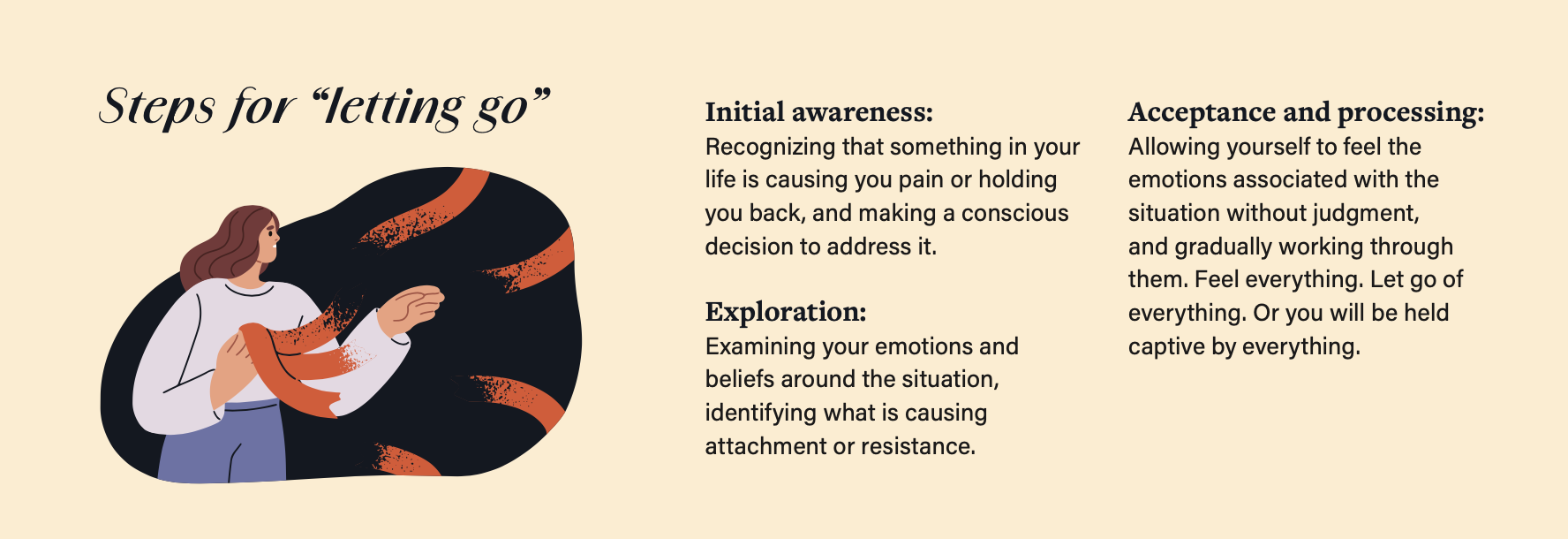
The following top-tier practices, methods, strategies outline a comprehensive approach to overcoming resistance and fear of the unknown, and accept what is when facing the process of letting go.
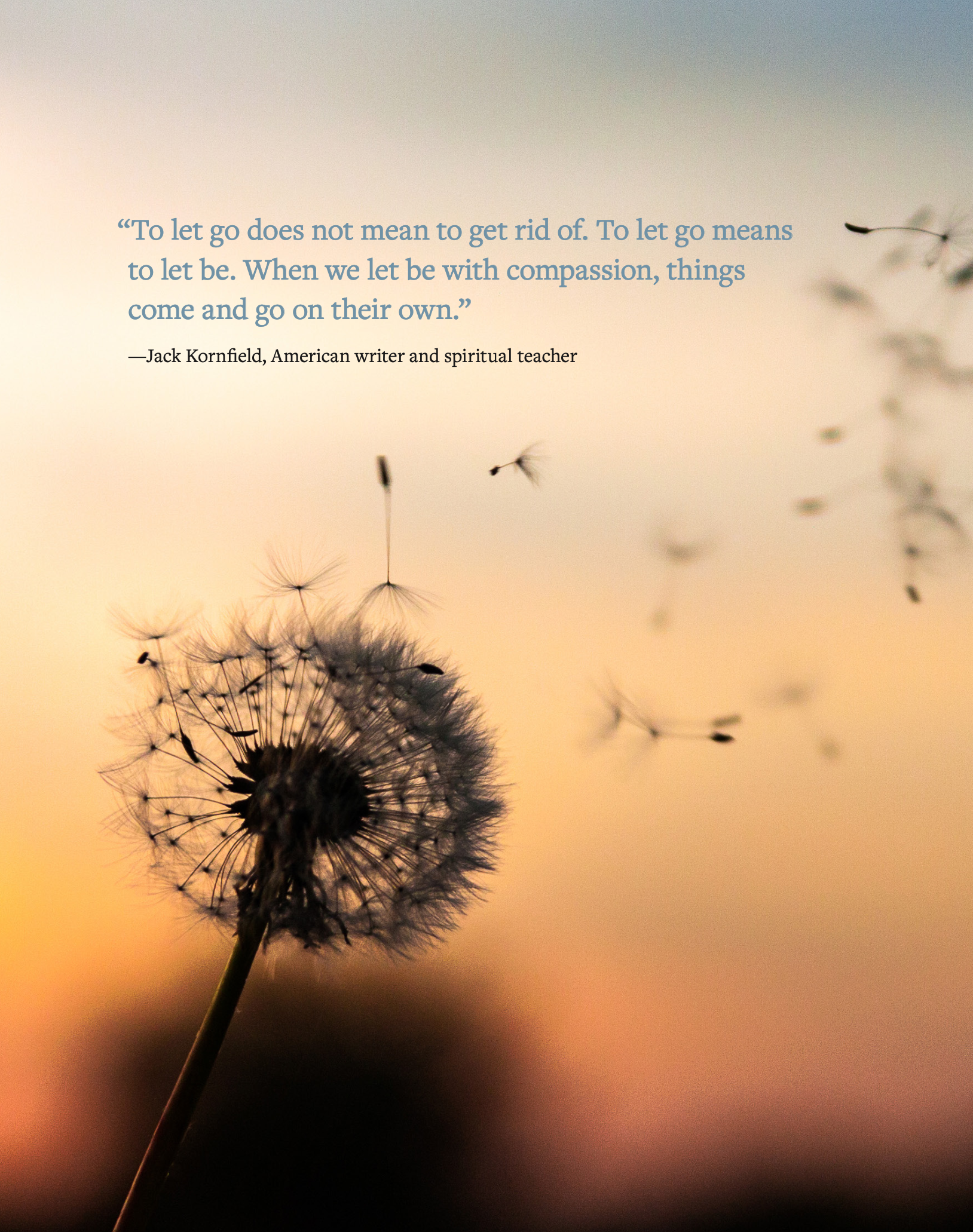
“It’s not a matter of letting go—you would if you could. Instead of ‘let it go,’ we should probably say ‘let it be.’”
—Jon Kabat-Zinn, author and founder of the Center for Mindfulness in Medicine, Health Care, and Society

Mindfulness
The practice of letting go goes hand in hand with cultivating mindfulness. It’s paying full attention to the present moment allowing you to observe your thoughts and emotions without judgment or getting caught up in them, which is essential for overcoming doubts, resistance, and fear. Mindfulness also teaches you to release control over things you cannot change and to trust in the journey. Practices like meditation, yoga, or journaling can help you stay grounded in the present moment and reduce the anxiety that often comes with uncertainty about the future.
Meditation
Meditation is the primary training technique for cultivating mindfulness and is a powerful tool for letting go, as it allows you to quiet the mind and connect with Spirit, Source, inner self, essence, or whatever name you may ascribe to this entity. Guided meditations as well as visualizations (a form of meditation) specifically focused on releasing attachments can help you visualize letting go and finding peace. For instance, you might imagine a balloon carrying your worries away or see yourself walking away from situations that no longer serve you. Even just a few minutes of daily meditation can create a sense of calm, grounding you as you work through the emotional and psychological challenges of letting go.
Acceptance
Acceptance is about embracing reality without trying to change, deny, or control it. It’s accepting the present moment and the natural flow of life, rather than clinging to outcomes or expectations. It’s recognizing that certain situations or emotions, even difficult ones, are beyond our control and we choose to accept them as they are, rather than resisting or fighting against them. Practicing acceptance involves actively noticing your thoughts and emotions, and choosing to respond to them without fear, judgment, resistance, or a struggle for control. Let them be. As is. Regularly practicing acceptance will hone this skill and can lead to increased emotional wellbeing, reduced stress, and greater resilience in the face of challenges.

Self-Reflection
A subset of mindfulness, identify what you’re holding onto and why. Understanding the root causes of your resistance and fears through introspection is crucial for addressing them effectively. Reflect on your true essence and values that go beyond external attachments. Consider what truly defines you as a person, separate from the roles you play or the possessions you have. Connect with your core values, passions, and qualities that make you unique.
Emotional Processing
Letting go of past hurts, grudges, and resentments allows us to heal, let go and move forward without the burden of unresolved emotions. This approach requires us to confront our emotions directly, understand them, and gradually work through them. Developing skills for emotional regulation help us detach from overpowering emotions. Mindfulness practices such as meditation, yoga, ecstatic dance, healing breathwork, grounding exercises, or engaging in activities that bring you joy and calmness are all extremely helpful—as is therapy, journaling, or even creative outlets like art and music. These practices help you detach from overwhelming emotions and create space for a more balanced perspective.
Self-Forgiveness
Cultivate forgiveness toward yourself as you consider your attachments and letting go. Release any resentment or grudges, freeing yourself from emotional burdens and allowing healing to take place. Forgiveness plays a pivotal role. However, it’s crucial to understand that forgiveness isn’t about forgetting or justifying the wrong that has been done. Instead, it’s about deciding not to let past hurts control our present and future emotional state.
Stop Controlling
Letting go often requires us to relinquish our desire for control. We must recognize that it’s impossible, and mentally exhausting, to control everything in our lives. Things go much more smoothly when you surrender control—when you let things happen instead of making them happen. By acknowledging the limitations of control, we can start to release our grip on things beyond our reach, which is an essential step in the process of letting go.
Change and Adaptation
Letting go becomes easier when we cultivate a growth mindset that embraces change and adaptation. Holding onto past experiences or fears often stems from a fixed mindset that resists change. Conversely, a growth mindset views change not as a threat but as an opportunity for learning and growth. By fostering such a mindset, we enhance our adaptability, making it easier to let go and move forward.
Letting Go Every Day
Morning Affirmations:
Setting the Tone for Your Day
Starting your day with positive affirmations, such as “I release what no longer serves me” or “I welcome growth and change,” helps set an intention for the day ahead. Pair with mindful breathing to enhance their impact, grounding you in a positive and purposeful mindset to navigate your day.
Evening Reflection:
Releasing the Day’s Weight
Ending your day with reflection is an equally important part of the practice of letting go. Before bed, review your day and identify anything that may have caused stress, frustration, or negativity. Acknowledge these feelings and consciously decide to release them. Consider journaling them.
Regular Check-Ins:
Staying in Alignment
Set aside time—whether it’s weekly, monthly, or quarterly—to check in with yourself and assess what’s no longer serving you.
By embarking on this transformative journey, we tap into our innate potential, create a life filled with meaning and purpose, and experience the true essence of freedom. Letting go is a deeply personal and transformative process. Celebrate your progress, remain patient with yourself, and trust that this journey will lead to a healthier, happier version of you. Letting go isn’t the end—it’s the beginning of something exciting and new. May we all find ways of letting go as an act of self-care.
The post The Power of Letting Go appeared first on Organic Spa Magazine.