

Can you build glowing, youthful skin without bone broth? Experts reveal smart, science-backed strategies for vegans and vegetarians.
Even the casual observer of the skincare world knows that bone broth is, well, a hot topic. Millennia after its inception, this collagen-rich elixir has made headlines across the globe this year, from Food & Wine (“Is bone broth actually liquid gold?”) to British GQ (“Oh, so you’re a bone broth guy now, but what are the actual skin benefits?”).
While the answers to these questions may be up for debate (anecdotal evidence suggests reduced wrinkles and increased firmness), one group has been excluded from the conversation altogether: vegetarians and vegans, who are equally stymied in the supplement aisle when they realize that any real collagen derives from an animal source, if they didn’t know already.
And that’s where the next pages come in. We’ve turned to the experts to find out what vegetarian and vegan skincare seekers can do to replace slow-simmered cow bones, hydrolyzed fish scales, acidified chicken feet, and other common sources of collagen. Read on for the lowdown.

But first, a reminder: Why is everyone trying to collagen-binge for better skin?
Collagen is our skin’s most abundant protein, says Doris Day, MD, a board-certified dermatologist and clinical professor of dermatology at the New York University Langone Medical Center in New York City. “It is what we call a structural protein, meaning that it plays a pivotal role in maintaining skin firmness and strength,” she explains. Natural aging not only weakens collagen but also diminishes its production—especially around menopause. And UV exposure, pollution, and stress have a pile-on effect. The frequent result? Creased and sagging skin. The theory of the case for ingesting collagen, then, is that you’re bolstering your weakened support structure with someone else’s (that someone having been a cow, fish, or chicken, generally).
Omnivore or not, should you be downing collagen to smooth and strengthen your skin?
Maryanne Makredes Senna, MD, an assistant professor of dermatology at Harvard Medical School, addressed that question alongside her colleague Payal Patel, MD, in a 2023 analysis for Harvard Health Publishing. “Our bodies cannot absorb collagen in its whole form,” they explained. “It must be broken down into peptides so it can be absorbed through the gut.” And while “these peptides may be broken down further into the building blocks that make proteins like keratin that help form skin, hair, and nails,” no human studies to date have “clearly proven that collagen you take orally will end up in your skin, hair, or nails.” To be fair, anecdotal evidence suggests otherwise, but the science isn’t quite there yet.
So where does that leave vegetarians and vegans?
“The goal,” says Dr. Day, “is to provide collagen precursors (amino acids that help your body synthesize its own collagen), anti-inflammatory compounds, minerals, and antioxidants, similar to what’s in bone broth, without the animal sourcing.” So while plants don’t contain collagen, “they can have the building blocks that can promote collagen production and overall skin health.” A few of her favorite cases in point: shiitake mushrooms (“just make sure they are properly cooked, otherwise they can cause severe rashes”), turmeric, kale, spinach, garlic, ginger, onions, peppercorns, carrots, and celery. “These can be cooked into a broth and strained,” she says.
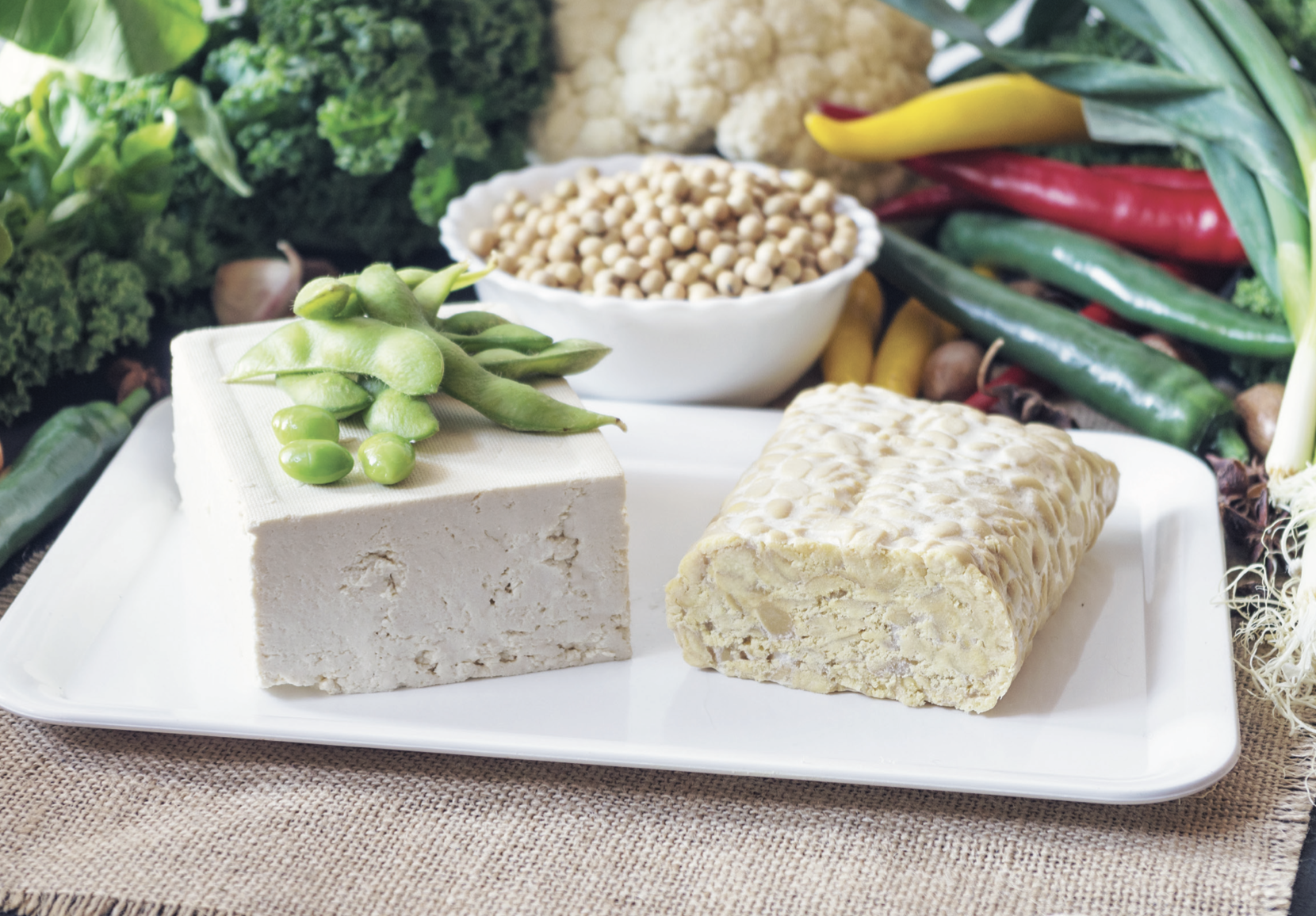
“I love my clients to have organic tofu and organic tempeh—they’re mild phytoestrogens as well, so they can also help with perimenopause and menopause symptoms.”
—Jennifer Hanway, board-certified holistic nutritionist
What about plant-based protein?
It should be a major focal point of your diet to ensure you’re getting enough of those collagen-supporting amino acids, says Jennifer Hanway, a board-certified holistic nutritionist in Boston with an international reputation as a beauty nutrition expert. While she considers chickpeas and quinoa mainstays in this context, as you probably do if you eat a plant-based diet, she warns against a common pitfall: “Typically, what we’ve seen for years are things like Buddha bowls, where you’ve got your chickpeas and your brown rice and your sweet potato—so you’ve got a ton of extra carbs in there.” And especially for women in midlife, when hormonal changes mean “we may not balance our blood sugar so well,” excess carbs can offset the benefits of protein. In short, sugar can damage collagen. “So if we’re getting our protein from plant-based sources, number one is not adding any extra carbohydrates.” Instead, “we’re going to add a bunch of veggies, we might add some healthy fats, but we’re not going to add carbs on top of the carbs that are attached to the plant protein.”
Other good proteins? Beans, lentils, and chia seeds, all “whole foods rich in collagen precursors,” says Dr. Day. Adds Hanway: “I love my clients to have organic tofu and organic tempeh—they’re mild phytoestrogens as well, so they can also help with perimenopause and menopause symptoms.”

“Look for foods and supplements derived from fermented bacteria or plant sources that contain amino acids including lysine, proline, and glycine.”
—Doris Day, MD
What else should vegetarians and vegans do to enhance collagen production?
“Look for foods and supplements derived from fermented bacteria or plant sources that contain amino acids including lysine, proline, and glycine,” says Dr. Day, explaining that these are “key building blocks of collagen found in bone broth.”
Hanway is also a fan of “smart supplementation,” adding leucine and L-glutamine to the list of ingredients to look for. “You can add those supplements into water or into your smoothie, and that’s going to give you those amino acids from a non-animal source that’s still going to help you with the collagen building.
The post Plant-Based Collagen Building Blocks appeared first on Organic Spa Magazine.