

A daily cup of tea can do wonders for your health—and state of mind.
If you’re already incorporating tea into your daily life, you know that not only is this mighty leaf delicious, it provides a long list of health benefits, too.
True teas, or the ones that are derived from the camellia sinensis plant, such as black, green, oolong, dark, and white teas, are your best bet, says Tracy Gensler, MS,RD, a registered dietitian in Maryland.
“These all naturally contain health-promoting bioactive compounds,” she says. “For example, tea is mainly comprised of flavonoids, which are plant compounds with antioxidant, anti-inflammatory, and disease-preventing properties.”
Case in point: Two cups of green or black tea contain 400 to 600 milligrams of flavonoids, the recommended daily intake shown to help reduce risk associated with cardiovascular disease and diabetes, and improve several metabolic markers, including blood pressure, cholesterol, and blood sugar. Two cups of white tea contain about 330 milligrams of flavonoids and the same amount of oolong tea contains about 230 milligrams of flavonoids.
“Across the world, from Himalayan retreats to desert hammams, Balinese sanctuaries to Nordic spas, tea is the quiet thread woven through nearly every wellness ritual.”
— Michelle Plummer, spa manager at Cara Organic Spa at the Carlisle Bay in Antigua
In addition, according to Gensler, studies also have shown that white, green, and black tea may help protect against cancer and keep bones healthy.
And, while “true teas” make up one important end of the tea spectrum, herbal teas offer a variety of health benefits, too.
Up first, chamomile tea. Naturally calming and often used to reduce stress and support better sleep, this flowery tasting tea has anti-inflammatory benefits since the flower contains apigenin, an antioxidant that helps fight inflammation in the body. “Chamomile tea may ease the symptoms of IBS, gas, or upset stomach, too,” says Amy Shapiro, MS, RD, a certified dietitian in New York City.
Bonus: Some research shows chamomile tea may help fight bacteria and strengthen our immune response.
Ginger is another potent herb that contains gingerol, a powerful (and spicy) compound that helps reduce inflammation and can help ease joint pain and menstrual cramps. “We also know that ginger tea can relieve nausea, bloating, and indigestion, which is why it’s commonly used for morning sickness or motion sickness,” Shapiro says.
Bonus: Ginger tea may also regulate blood sugar, improve insulin sensitivity, and lower fasting blood sugar levels.
A cool minty cup of peppermint tea is a favorite for so many reasons as it soothes digestion by relaxing the digestive tract muscles, helping relieve bloating, gas, and indigestion. “The menthol in peppermint may ease tension headaches and migraines, act as a natural decongestant, and may ease cold or allergy symptoms,” Shapiro says.
Bonus: The invigorating scent of peppermint can help improve focus and alertness without caffeine.

Ultimately, whether you drink tea to add dedicated moments in your day to de-stress and focus inward or just because it tastes delicious, thank yourself because you’re helping your body stay healthy, too. Whether it’s used in treatments or rituals, relaxation room teapots or simply in to-go cups, tea plays a starring role at every single spa.
“Across the world, from Himalayan retreats to desert hammams, Balinese sanctuaries to Nordic spas, tea is the quiet thread woven through nearly every wellness ritual,” says Michelle Plummer, spa manager at Cara Organic Spa at the Carlisle Bay in Antigua. “Ancient, unhurried, and deeply nourishing, tea is more than a beverage. It’s a ceremony of care for body, spirit, and the space in between.”
The specific ways tea is incorporated into spa culture are endless, too.
“In Japan, matcha is frothed and sipped in mindful stillness,” Plummer says. “In Morocco, mint tea is poured with grace to cool the body and welcome the soul. In India, Ayurvedic infusions of tulsi or holy basil, ginger, and cardamon support digestion and clarity.”
With its ability to calm the nerves, warm the gut, balance energy, and prepare the body to receive touch, the leaf will forever play a role in so many aspects of a spa experience.
“Modern spas worldwide have embraced this ancient wisdom, whether in a Thai herbal compress, a green tea facial, or detoxifying tea soak,” Plummer adds. “The healing compounds of tea—antioxidants, anti-inflammatories, and adaptogens have become essential tools in holistic care.”

Infuse Yourself in Luxury at These 8 Tea-Loving Resorts
Pre-Dinner Tea Ritual
Cara Organic Spa at the Carlisle Bay, Antigua
“Tea isn’t reserved for the spa alone. It’s for every guest, every day. As the sun begins its descent, a daily tea ritual invites guests to pause. Served just before dinner, it offers a moment of quiet reflection. Herbal blends like lemongrass, ginger, and rosemary are steeped and poured with intention. The effect is subtle but profound. As the island breeze softens and golden light fades over the bay, guests sip tea like a memory, soft, warm, and grounding.”—Michelle Plummer, spa manager
Tibetan Table Thai Massage
Isla Bella Beach Resort, Marathon, Florida
“Guests consistently comment that their favorite part of this spa treatment is the moist heat that transfers from a Thai herbal tea ball, which has been steamed in a rice cooker, to their skin. Our therapists apply pressure to the muslin tea ball and use a rolling motion to treat the different muscle groups. Guests say that it feels like they’re getting the benefits of a deep tissue massage, even though the pressure is lighter, thanks to the moist heat and therapeutic herbs.” —Jessica Tipler, spa director
Sukun Ritual
Talise Spa at Jumeirah Marsa Al Arab, Dubai
“Tea is woven into the spa journey through our signature Sukun Ritual, a calming ceremony inspired by Arabian hospitality and the tradition of finding stillness among loved ones. Guests begin or conclude their treatment with adaptogenic herbal infusions crafted to restore balance and enhance wellbeing. These teas—blended with moringa, butterfly pea flower, basil, rose petals, and olive leaf—are elevated with small-batch, alcohol-free tinctures, extracted over 30 days using a traditional drip method to deliver concentrated phytonutrients. The ritual supports stress relief, respiratory health, and sustained energy, making it a vital part of the spa experience.” —Ana Jovanovic, spa director

“Tea is mainly comprised of flavonoids, which are plant compounds with antioxidant, anti-inflammatory, and disease-preventing properties.”
— Tracy Gensler, MS, RD, registered dietitian in Maryland
Tea-Infused Jacuzzis
Adriana Hvar Spa Hotel, Croatia
“Guests are often surprised to learn that our Jacuzzi experience is steeped, quite literally, in local herbal traditions that date back generations. We infuse the water with handpicked Hvar herbs like lavender, mint, sage, and rosemary, which are dried and prepared just as they have been for centuries. The result is a soothing, aromatic soak that blends modern wellness with time-honored island rituals. Guests regularly describe it as both deeply rejuvenating and emotionally grounding—like becoming one with the nature of Hvar while wrapped in true luxury.”—Mare Softić Runje, spa director
Green Tea Body Detox Wrap
Chi, The Spa at Shangri-La Bosphorus, Istanbul, Turkey
“This deeply detoxifying ritual begins with an omega-rich green tea seed oil massage, followed by a 1,000-flower vitamin wrap, and finishes with a nutrient-dense balm to rebalance the body and replenish the skin. Guests often describe it as a full body reset: deeply relaxing yet subtly energizing from the inside out. One guest remarked, ‘It felt like emerging from a cocoon, renewed, weightless, and glowing, like a butterfly.’”—Selma Yildirim, spa director
Tea-LC Body Treatment
The Spa at Barnsley Resort, Adairsville, Georgia
“Tea is full of antioxidants, which neutralize free radicals that can damage skin. By infusing a body mask with freshly brewed tea, we can enhance the anti-aging benefits, and the anti-inflammatory properties of tea can reduce redness and soothe the skin, counteract inflammation, and hydrate. And, since we use our signature lavender, mint, and cardamom blend, it smells really good, too. Guests often comment that their skin feels firm and smooth and that they smell great!”—Sarah McAbee, spa director
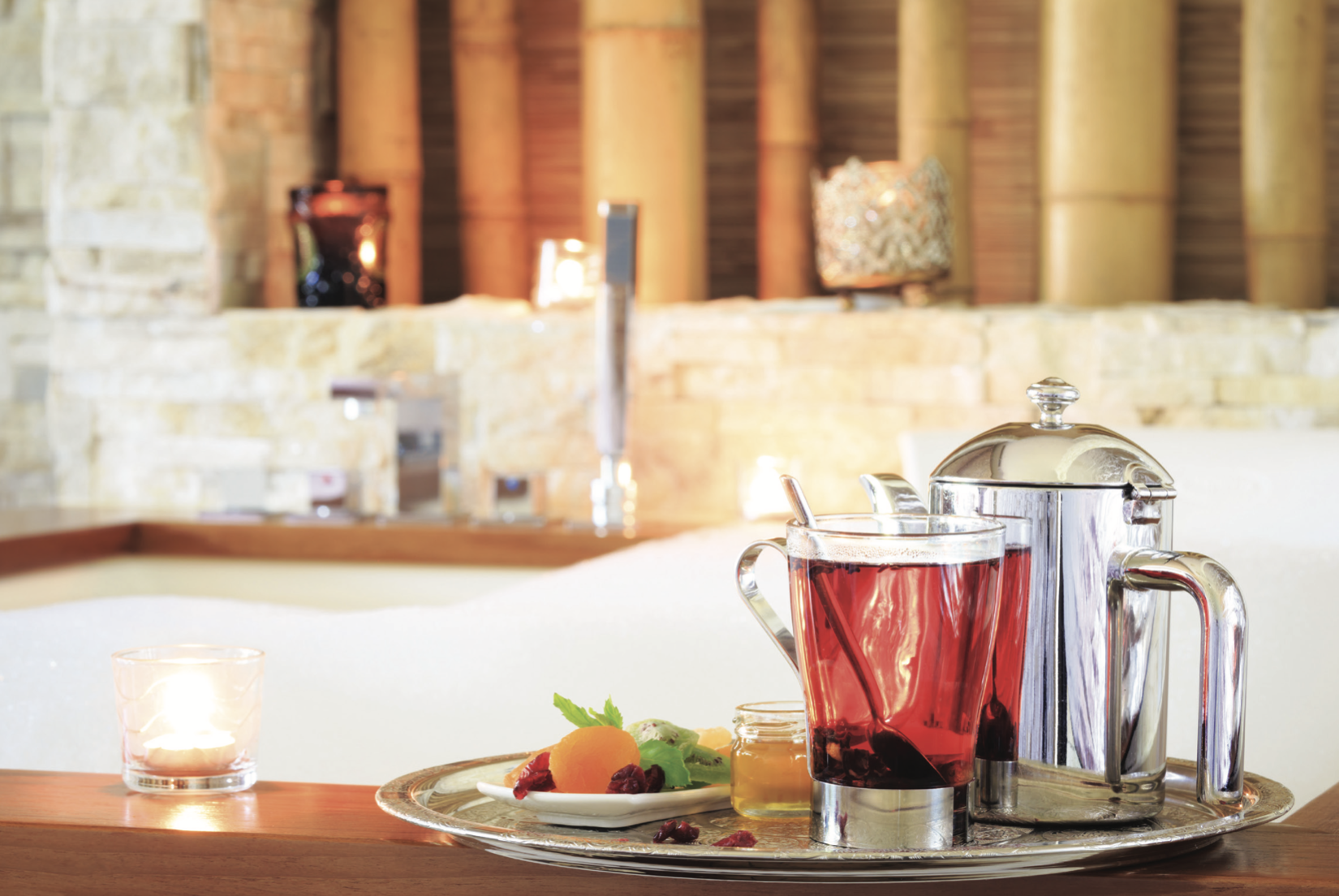
Skjól Ritual
Sky Lagoon, Iceland
“Saft, a traditional Icelandic berry drink, made with handpicked Icelandic crowberries and herbal tea, is served to guests to capture a moment of stillness and restoration after the spa’s seven-step Skjól Ritual, contrast therapy that includes a cold plunge, sauna, and our signature sea salt scrub. Saft offers a gentle return to the senses, rehydrates the body, but more than that, it taps into a sense of home and tradition. For many Icelanders, Saft is tied to childhood and family, and for our international guests, it becomes a small, meaningful moment of cultural connection. It’s not just a beverage, it’s part of the grounding experience that brings the ritual full circle.”—Helga Albertsdottir, managing director
Detox Herbal Wrap
Hemlock Neversink, New York
“This treatment begins with dry brushing to stimulate lymphatic drainage while lightly exfoliating the skin. We use an herbal tea blend, consisting of ginger, rosemary, allspice, eucalyptus, and clove, which we steep and then soak the compresses in before they are applied to the body. When the body is wrapped in a warm tea-soaked towel, the pores of the skin are opened and the countless benefits from each of the herbs in the tea go to work. Guests tend to highlight the soothing nature of this experience, feeling like they are enveloped in a warm cocoon while they receive focused work on their face and neck.”—Ryan Shulman, spa director
The post Tea Time appeared first on Organic Spa Magazine.